Bonus Depreciation 2025
Bonus Depreciation 2025
Bonus Depreciation 2025: Should Growth Companies Accelerate or Wait?
Should you take bonus depreciation now or wait?
It depends on your company’s current taxable income, expected future tax rates, and long-term growth strategy. In many cases, accelerating deductions improves immediate cash flow, but in others, deferring depreciation can preserve more value over time.
Growth companies rarely ask, “Can we take the deduction?”
The better question is,
“Should we take it now?”
Bonus depreciation remains a powerful tool but in 2026, the decision is no longer automatic. With phased down rates and shifting tax outlooks, timing can either protect cash flow or quietly erode long term value.

What Changed with Bonus Depreciation
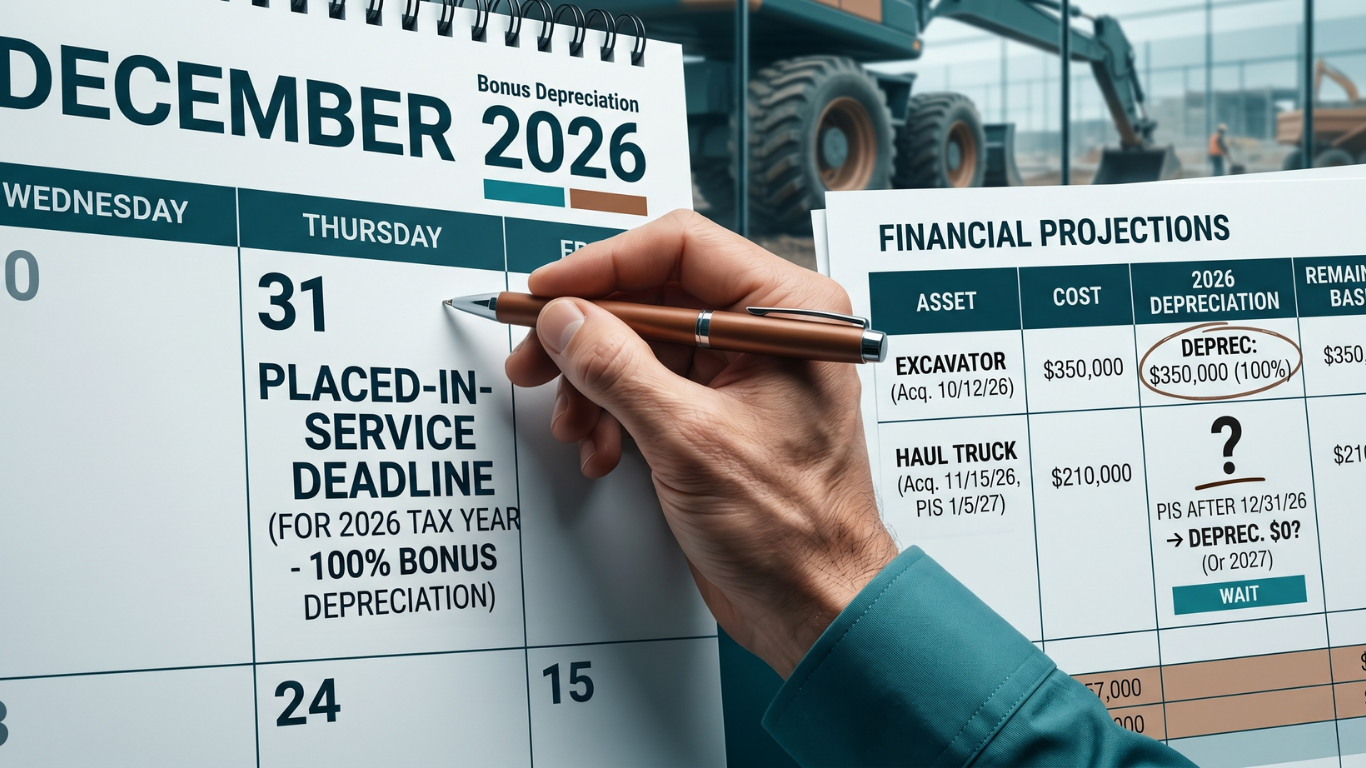
Under current law, bonus depreciation is no longer 100%. It has phased down, meaning:
- The timing of asset placement matters more
- The value of the deduction depends on your tax rate now vs later
- The interaction with NOLs can dilute immediate benefit
This isn’t a compliance decision anymore. It’s a capital allocation decision.
The same deduction can be worth more or less depending on when you take it.
When Should You Accelerate Bonus Depreciation?
Accelerate bonus depreciation when:
- You have strong taxable income this year
- You expect lower income next year
- You need to improve cash flow immediately
- You’re investing heavily in equipment, facilities, or fleet
Construction and manufacturing companies often benefit here especially during growth cycles.
When Is It Better to Wait?
Deferring depreciation can be the better move when:
- You expect higher tax rates in the future
- Current year deductions would create or expand NOLs
- You anticipate a liquidity event or sale
- You want to preserve deductions for future high-margin years
Taking every deduction now is not always optimal.
Bonus Depreciation vs Section 179: What’s the Difference?
Many business owners group Section 179 and bonus depreciation together, but they serve different purposes:
- Section 179
- Targeted and limited
- Allows selective expensing of assets
- Bonus Depreciation
- Broad application
- Can create or increase losses
A well structured tax strategy uses both tools together not as substitutes.
The Strategic Layer Most Companies Miss
The real value of bonus depreciation is not in the deduction itself.
It’s in how it aligns with:
- Your growth trajectory
- Your tax rate outlook
- Your reinvestment strategy
- Your exit timeline
Bonus depreciation is a timing strategy, not a default election.
The Bottom Line
In 2026, bonus depreciation decisions require modeling not assumptions.
If your company is investing in growth and your depreciation strategy hasn’t been reviewed recently, there’s a strong chance value is being left on the table.
If you’d like to evaluate how your current capital plan aligns with your tax strategy, we’re happy to walk through it.
FAQs
What is bonus depreciation in 2025?
Bonus depreciation allows businesses to immediately expense a large percentage of qualifying asset costs, though the percentage has phased down from prior years.
Should I take bonus depreciation every year?
Not necessarily. The decision should be based on current income, future tax expectations, and long-term strategy.
Can bonus depreciation create a loss?
Yes. Bonus depreciation can create or increase a Net Operating Loss, which may reduce its immediate value.