The $50M Exit: Tax Strategy Before You Sell Your Business
The $50M Exit: Tax Strategy Before You Sell Your Business
The $50M Exit: Why Your Tax Strategy Today Determines What You Actually Keep Tomorrow
The Tax Gap Most Owners Never See Coming
When a business sells, the default tax treatment is rarely optimal.
Depending on:
- Entity structure
- Asset composition
- Deal terms
- Allocation of purchase price
- Multi-state nexus exposure
You may face:
- Federal capital gains tax
- Ordinary income treatment on certain assets
- Depreciation recapture
- Net investment income tax
- State taxes in every jurisdiction where you’ve established nexus
Owners who engage their CPA three to five years before a transaction retain meaningful structural flexibility.
Those who call 60 days before closing retain very few options.
Exit tax outcomes are determined years before the deal not during negotiations.
Qualified Small Business Stock (QSBS): The Most Underutilized Exclusion in the Tax Code
Under IRC Section 1202, gains on Qualified Small Business Stock may be excluded from federal income tax up to:
- $10 million per taxpayer, OR
- 10x the adjusted basis of the stock
But the requirements are specific:
- Must be C corporation stock
- Original issuance
- Held for more than five years
- Active business qualification requirements met
For technology, SaaS, and growth-oriented companies structured properly from inception, QSBS can be transformational.
The planning window is at formation not at exit.
If your business has operated as an LLC or S corporation for years, conversion strategies may still be available but they require timing discipline and a long runway.
QSBS is not an exit strategy. It is a formation strategy.
Installment Sales and Earnouts: Deferral Is a Strategic Lever
Installment sales allow sellers to receive proceeds across multiple years.
That matters because spreading recognition of capital gain:
- May keep income within favorable brackets
- May reduce exposure to surtaxes
- May preserve planning flexibility
Earnouts introduce additional complexity.
Tax treatment depends on:
- Contingency terms
- Characterization of payments
- Whether payments are tied to employment
- Allocation within the purchase agreement
Deal attorneys often negotiate from legal and valuation perspectives.
The IRS evaluates from an income characterization lens. Those objectives do not always align.
Your CPA should be modeling scenarios before the letter of intent is signed not reacting once it is drafted.
Payment structure is not just a business negotiation, it is a tax decision.
Entity Structure Optimization: The Conversion Conversation
Entity type dramatically influences exit taxation.
For S Corporations
If the company was formerly a C corporation within the past five years, built-in gains (BIG) tax may apply upon asset sale.
For LLCs
Asset sales may trigger:
- Ordinary income treatment on depreciation recapture
- Inventory recharacterization
- Self-employment implications
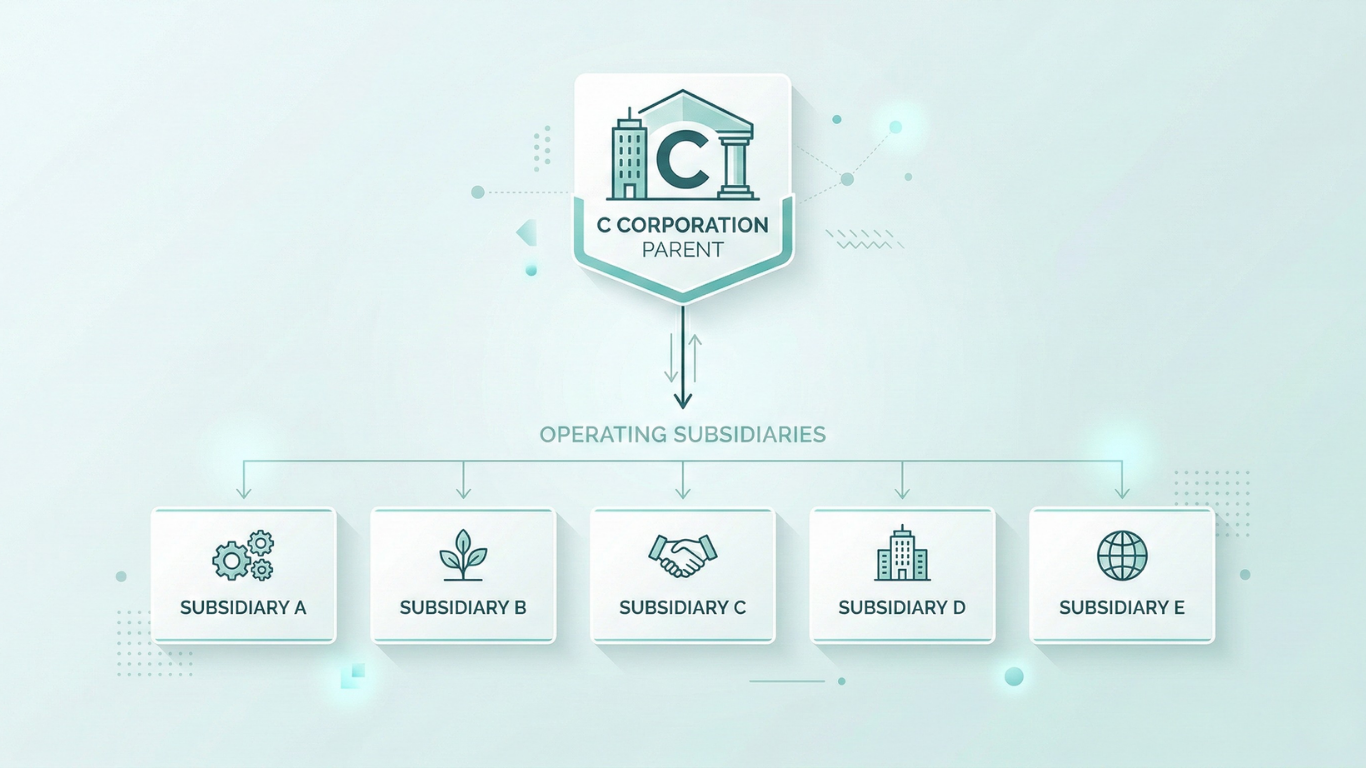
For C Corporations
Stock sales may offer capital gain treatment to shareholders, but asset sales can introduce double taxation concerns.
In certain situations, converting to a C corporation and initiating a QSBS holding period may be advantageous but this requires years of planning.
Entity restructuring cannot be done retroactively once a deal is imminent.
Exit flexibility is determined by structural decisions made years earlier.

What a 3-Year Exit Runway Looks Like in Practice
High-quality exits are rarely accidental.
Year One:
- Clean up financial reporting
- Normalize owner compensation
- Conduct preliminary valuation
- Model tax outcomes under stock vs asset sale scenarios
- Evaluate QSBS eligibility
Year Two:
- Implement restructuring if appropriate
- Explore charitable planning (DAFs, CRTs where appropriate)
- Evaluate grantor trusts or estate strategies
- Stress-test multi-state exposure
Year Three:
- Engage investment banking or M&A advisors
- Align purchase price allocation modeling
- Evaluate earnout treatment
- Prepare leadership continuity plan
The businesses receiving premium multiples are often those that arrive prepared, not simply profitable.
Buyers reward readiness.
Multi-State Considerations: The Overlooked Exposure
If your business operates in multiple states, exit planning must consider:
- State-level capital gains taxation
- Apportionment rules
- Pass-through vs corporate treatment
- State sourcing rules
Federal modeling without state analysis is incomplete modeling.
Sophisticated planning evaluates both simultaneously.
The Bigger Reality
Most owners optimize EBITDA.
Few optimize after-tax proceeds.
Enterprise value is only part of the equation.
What you keep after federal, state, and structural consequences defines the true outcome.
Exit planning is not an event.
It is a discipline.
If you have not had an exit-focused structural conversation with your CPA in the last 12 months, that conversation is overdue. If you would like to explore how your current entity structure and growth trajectory align with long-term exit planning, we are happy to have that discussion.